
 45 views
Balancing Work and Study: How to Manage Both Without Burning Out
Balancing work and studies? Learn essential strategies: set goals and sub-goals, identify productivity triggers, adopt a growth mindset, build a support system, and track progress. Master time management for success in both areas.

Saima Islam
Assistant Clinical Psychologist
 4.95
4.95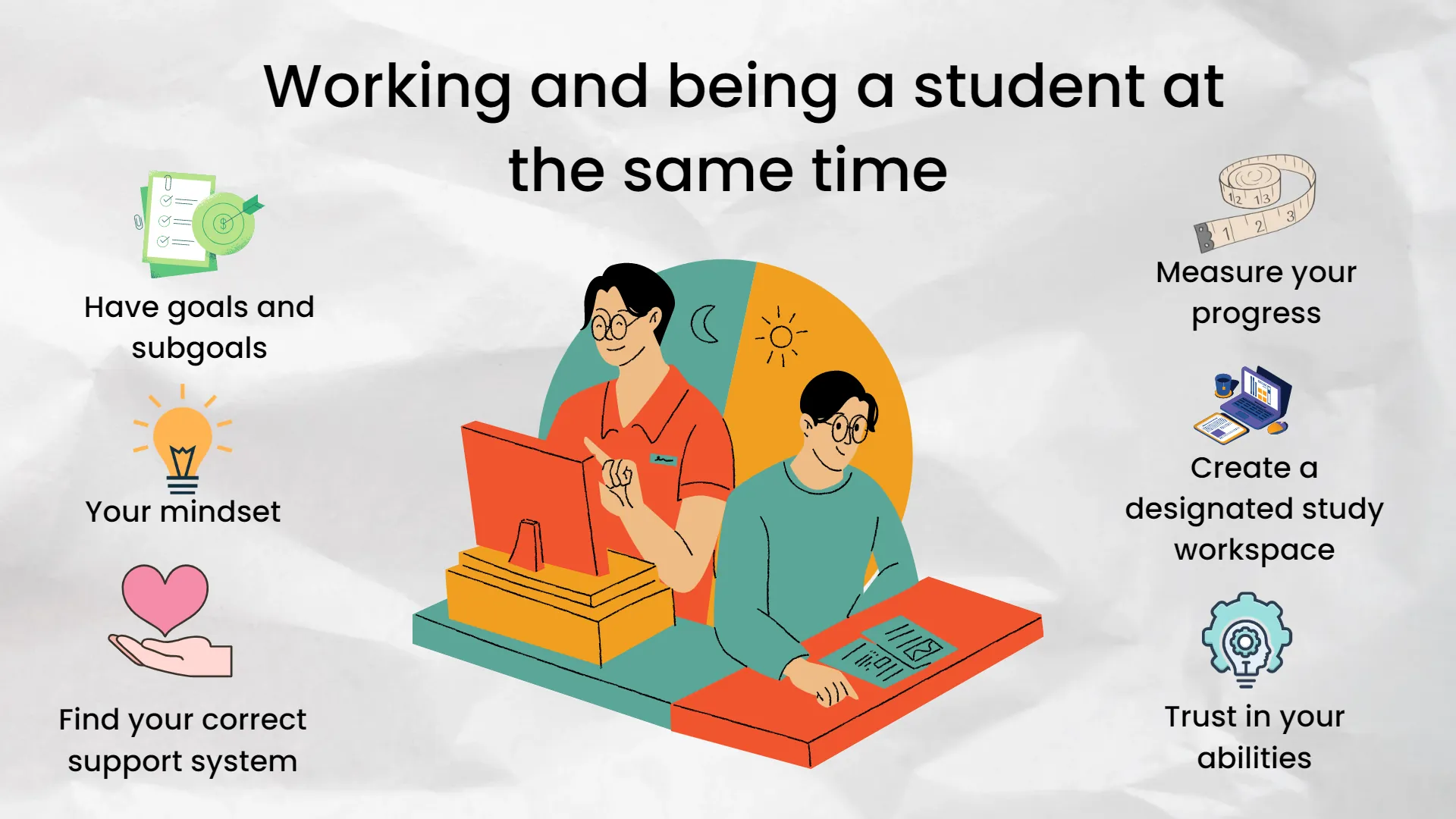
Key Takeaways
Successfully balancing a job and academics relies entirely on energy management rather than raw hustle. By breaking overwhelming yearly objectives down into monthly milestones and concrete calendar tasks, you can eliminate academic anxiety. Maximizing your limited time requires identifying your personal "productivity triggers", such as a cup of coffee, a structured deadline, or social accountability, and intentionally activating them daily. Ultimately, transitioning to a growth mindset helps you view setbacks as lessons rather than failures, while surrounding yourself with a supportive community and tracking your weekly progress allows you to adjust your lifestyle before hitting a wall of total burnout.
Balancing Work and Study
Juggling a job and a degree at the same time can feel like a never-ending survival mode. When your calendar is packed with deadlines, lectures, shift work, and exam prep, it is easy to let stress take over.
But balancing work and study isn't about grinding harder, it is about managing your energy and your time strategically.
1. Deconstruct Big Goals into Actionable Sub-goals
Looking at everything you need to accomplish in a semester can feel paralyzing. To beat the overwhelm, you need to break big yearly or semester goals down into bite-sized, monthly wins.
- The Big Goal: Read 12 academic or personal development books in a year.
- The Sub-goal: Complete exactly one book each month.
- The Action Step: Schedule specific reading blocks into your weekly and daily calendar.
This same decomposition strategy applies to your course assignments, work projects, and exam preparation. When a task is small enough to fit into a single afternoon calendar slot, procrastination disappears.
2. Identify Your Personal "Productivity Triggers"
Productivity isn't random; it is triggered by specific internal and external factors. To maximize your limited hours, you need to figure out what flips your brain into "focus mode."
Ask yourself what gets your gears turning:
- Is it a cup of black coffee before a study session?
- Is it a clean workspace and noise-canceling headphones?
- Do you thrive on tight deadlines or external accountability (like a study buddy)?
Once you identify your unique productivity switches, intentionally build them into your daily routine to trigger deep focus on command.
3. Protect Your Mindset
When you are balancing two major life commitments, setbacks are inevitable. You might miss a study goal or have an exhausting day at work. This is where a growth mindset becomes your best asset.
Instead of viewing a difficult week as a failure, view it as data. Ask yourself: What went wrong, and how can I adjust my schedule next week to fix it? Embracing a growth mindset turns every obstacle into a lesson rather than a source of anxiety.
4. Build a Supportive Community
You are the average of the people you surround yourself with. When your time is limited, you cannot afford to spend it with people who drain your energy or dismiss your ambitions.
Surround yourself with a community that understands your goals, whether that means ambitious classmates, supportive colleagues, or family members who respect your study blocks. A solid support system keeps you motivated when your energy dips.
5. Track and Measure Your Progress Weekly
You cannot improve what you do not measure. Set up a simple weekly tracking system to review your productivity and mental well-being.
At the end of every week, reflect on your calendar:
- Did you hit your sub-goals?
- Where did you lose time?
- Are you feeling unsustainably tired?
Regularly measuring your progress allows you to pivot, adjust your lifestyle, and change your goals before you hit a wall of total exhaustion.
Prioritize Your Mental Well-being
If, despite your best efforts, the pressure of working and studying feels overwhelming, remember that asking for help is a sign of strength, not weakness. Constant exhaustion, anxiety, and feeling "stuck" are clear signs that your mind needs support.
Talking to a professional counselor can provide you with personalized tools to manage stress, build better routines, and protect your mental health while you chase your career and academic dreams.
Relaxy is here to support you. Our expert panel of psychologists understands the unique pressures faced by working students. We offer the exact tools you need to reduce stress, rebuild your work-life balance, and move forward stronger.
- Book your session with a Relaxy Expert today and take the first step toward a balanced life.
This article is for general education and is not a diagnosis or a substitute for individual medical advice.
Last updated: October 25, 2026
Did you find this article helpful?
Saima Islam
Assistant Clinical Psychologist
4.95Warm and empathetic psychologist specializing in CBT and DBT for depression, anxiety, trauma, and relationship challenges
